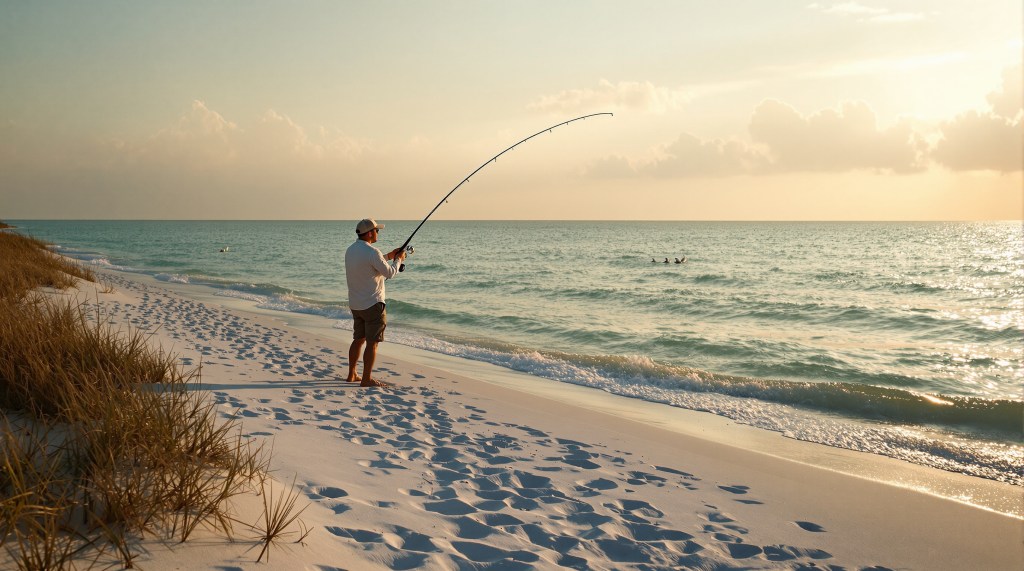
Fort Myers Beach sits at the mouth of Estero Bay, which is a polite way of saying the fishing starts about forty feet from the driveway. You have the Gulf on one side, a 10,000-acre estuary on the other, and more passes, mangroves and dock lights in between than you could fish in a month of early mornings.
This is a working guide for guests who want to actually catch something — not a brochure. Below: where to go, what’s biting when, what gear you actually need, and the one piece of local knowledge that matters more than any lure in the box.
First, the thing that matters most: moving water
In Southwest Florida, tides are the whole game. Fish feed when water moves and sulk when it sits still. The two hours on either side of a tide change — especially a falling tide draining off the flats — will out-fish a full day of dead water with the most expensive tackle on the rack.
Before you leave the house, pull up a tide chart for Matanzas Pass or Point Ybel. High tide is when you can get a skiff deep into the back creeks. Low tide is when the fish stack up in the channels and around the pass mouths. Plan the trip around the water, not around breakfast.
Where to fish without a boat
You do not need a charter, a boat, or a guide to have a genuinely good morning. The island is unusually generous to shore anglers.
- Bowditch Point Park — the north tip of the island, where the Gulf meets Big Carlos Pass. Fish the beach side for whiting, pompano and the occasional Spanish mackerel; fish the pass side on a moving tide for snook and redfish. It’s a county park, so there’s parking, restrooms and a short walk — which makes it the easiest first stop for families.
- Lynn Hall Memorial Park / the pier area — the classic crowd-pleaser. Snapper, sheepshead, jacks and ladyfish are the regulars. Great for kids because something almost always bites, and there’s food and a beach right there when attention spans run out.
- Matanzas Pass Bridge — the shadow line under the bridge is a known snook hangout. Fish it on the tide change with live bait or a swimbait and be ready to lose a few to the pilings. That’s part of the deal.
- The beach at dawn — surf fishing off the sand is the most underrated option on the island. Whiting and pompano patrol the troughs just off the beach. A light rod, a pyramid sinker, and fresh shrimp is a complete kit.
Where to fish with a boat or a guide
Estero Bay is the reason people move here. It’s Florida’s first aquatic preserve, and it fishes like a maze in the best way — oyster bars, mangrove shorelines, sand holes and creek mouths, all within a few minutes of the island. Redfish tail on the flats at first light. Trout sit over the grass in three to six feet of water. Snook hunt the creek mouths on the outgoing tide.
If you want to go with a guide, book a back-bay light-tackle charter rather than a deep-sea trip. The nearshore Gulf out of FMB is a long run for modest payoff. The bay is where the action is, and a good captain will put you on fish in twenty minutes instead of ninety. Half-day trips are the sweet spot for families; serious anglers should book the full day around a tide.
What’s biting when
- Fall (October–November) — the best inshore window of the year. Redfish schools up, snook move back into the passes after spawning, trout and sheepshead everywhere. Also stone crab season, if you like a side quest with butter.
- Winter (December–February) — sheepshead around pilings and dock structure, trout in the deeper bay holes, whiting in the surf. Cold fronts shut things down for a day or two, then it turns back on.
- Spring (March–May) — snook and redfish get aggressive as the water warms, tarpon start showing along the beaches in late spring, and the bait runs through the passes.
- Summer (June–September) — fish early or fish at night. Tarpon along the beach, snapper and snook in the passes after dark under the dock lights. Midday heat is for the pool.
The honest gear list
Two rods cover 90% of it. A 7-foot medium spinning rod with 15-pound braid for the bay and passes. A 9-foot surf rod if you plan to fish the beach. Terminal tackle: 1/0 to 3/0 circle hooks, 20- and 30-pound fluorocarbon leader, a handful of 1/4 to 1/2 ounce jig heads, and a few swimbaits in pearl or chartreuse.
Bait beats lures for beginners, full stop. Live shrimp is the universal currency here. Frozen shrimp works. A cast net and a bucket gets you pilchards and pinfish for free if you’re feeling ambitious.
One practical note: circle hooks are now the standard for most bait fishing in Florida, and they’re also just better — they hook the fish in the corner of the mouth instead of the gut, which means cleaner releases and fewer fish you can’t keep.
Licenses, rules and the stuff people forget
Florida requires a recreational saltwater fishing license for most anglers, and there’s a separate, cheaper shoreline license if you’re fishing from land. Short-term and annual options both exist. Check the Florida Fish and Wildlife Conservation Commission (FWC) site for current fees, exemptions and — this matters — current seasons and bag limits. Snook and redfish regulations change, and snook is catch-and-release during parts of the year. The rules are enforced, and they exist because the fishery is worth protecting.
Other things that separate a good day from a frustrating one:
- Polarized sunglasses. Not optional. They cut glare so you can actually see the sand holes and the fish. Cheap ones work; no sunglasses does not.
- A landing net and a wet towel. Handle fish with wet hands, support the belly, keep them out of the air for a photo and get them back in the water.
- Sunscreen and water — and reapply. The reflection off the water doubles your exposure.
- Bug spray for the back bays at dusk. The mangroves are gorgeous and the no-see-ums know it.
- Check the red tide and water quality reports before a trip. FWC publishes current status. It’s rare, but it’s worth a two-minute check.
Cooking what you catch
If you’re keeping fish, bleed them immediately, keep them on ice, and fillet them the same day. Redfish, trout and snapper are all excellent simply blackened in butter or grilled with lime and garlic. Whiting is one of the most underrated eating fish in Florida — mild, sweet, and forgiving of a beginner’s fillet job.
Clean up at a fish cleaning station or bag the racks and put them in the freezer until trash day. Leaving carcasses in the outdoor bin in July is a decision you’ll regret by Tuesday.
One last local truth
The people who catch fish here aren’t the ones with the most gear. They’re the ones who got up early, looked at a tide chart, and picked one spot and fished it properly instead of running all over the island. Pick your water, read it, and give it an hour.
And when you come back with a cooler and salt in your hair, the pool and the hot tub are about fifteen steps from the door. That’s the whole point of the house.
Check availability at “Do We” Beach House →
#fortmyers #comingbackstronger #FMBSTRONG #beachstyler #fortmyersstrong #fortmyersbeach #fortmyersflorida


Leave a Reply