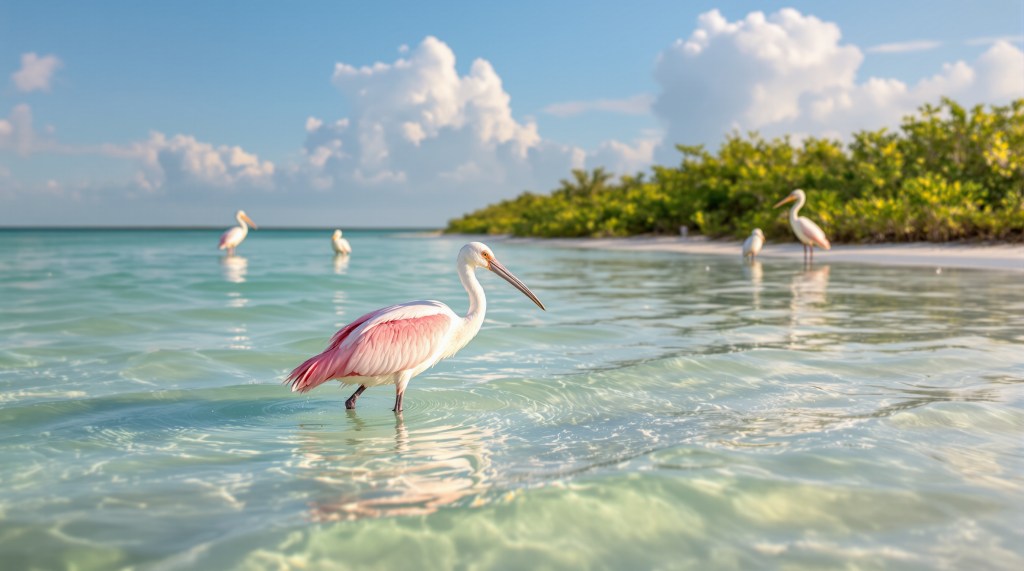
October is one of the best months of the year to pick up a pair of binoculars on Estero Island — here’s where to look and what you’ll see.
Fort Myers Beach sits on a thin ribbon of sand between the Gulf of Mexico and Estero Bay, which makes it one of the most productive birding corridors on Florida’s southwest coast. On one side you have open Gulf; on the other, a twelve-mile estuary of mangroves, seagrass flats, and tidal creeks. Birds that love one rarely love the other — so a single day here can turn up two completely different casts of characters.
If you’re staying at our beach house, you’re already in the middle of it. Here’s how to plan a morning (or three) of birding without leaving the island.
Why fall is prime time
Southwest Florida sits on the Atlantic Flyway, and the fall migration runs roughly August through November. That overlap means resident birds are still around while thousands of migrants pass through or settle in for the winter. October and November bring warblers, buntings, and raptors down the coast — and the temperatures finally make a morning walk a pleasure instead of a chore.
The birds you’re most likely to see
- Roseate spoonbill — the showstopper. Pink, prehistoric-looking, and surprisingly common around Estero Bay. Watch for them sweeping their bills side to side through the shallows.
- Brown pelican — everywhere along the Gulf shore. The dive-bombing feeding style never gets old.
- Osprey — nesting pairs patrol the bay, hovering and then plunging feet-first for fish. You’ll usually hear the chirping call before you see them.
- Great egret, snowy egret, and great blue heron — the reliable wading crowd. Best at low tide when the flats are exposed.
- Black skimmers and royal terns — skimmers fly with their lower bill slicing the water, which is worth the walk on its own.
- Bald eagle — yes, really. A few pairs nest around Estero Bay; scan the taller pines and snags across the water.
Where to go, in order of effort
1. The beach at the end of the street
You don’t have to go far. The Gulf shoreline a short walk from the house is a fine place to start at sunrise — shorebirds, gulls, terns, and pelicans working the surf line. Go early, walk slowly, and let the birds come to you.
2. Little Estero Island Critical Wildlife Area (south end)
The island’s wild southern tip is a protected nesting and resting area for shorebirds and least terns, with posted buffer zones. Bring binoculars or a spotting scope and view from the marked edges — this is one of the best spots in the region to watch birds you won’t find in a manicured park.
3. Matanzas Pass Preserve
A shaded network of boardwalks through mangrove forest right on the island. Cool, quiet, and good for songbirds, woodpeckers, and the occasional owl. A great midday option when the beach is hot.
4. Bowditch Point Park (north end)
Seventeen acres of dune and maritime hammock with a natural beach. Good for seabirds on the Gulf side and waders in the shallows.
5. Lovers Key State Park (ten minutes south)
Over 1,600 acres of undeveloped barrier island with kayak trails and a tram out to the beach. The mix of Gulf and bay habitat makes it a one-stop birding destination. Enter off Estero Boulevard just before the bridge.
6. Bunche Beach Preserve (across the bridge)
World-class tidal flats for shorebirds and waders — one of the top birding sites in Lee County, especially at low tide. A short drive over the Matanzas Pass Bridge and worth every minute.
7. J.N. “Ding” Darling National Wildlife Refuge (Sanibel — a half-day trip)
If you’ve got a car and a morning, this is the marquee destination: a four-mile wildlife drive, walking trails, and a famous concentration of wading birds. Go at low tide and bring the camera.
How to actually see more birds
- Go at low tide. Exposed flats concentrate food — and the birds that eat it.
- Sunrise beats sunset. Birds feed hard in the first two hours of light.
- Move slowly and quietly and stay on the sand or boardwalk. Never push a flock into flying — it burns energy they need.
- Respect nesting areas. Posted buffers at Little Estero and roped-off dunes exist for a reason; a patient viewer sees more anyway.
- Binoculars beat a camera for a casual trip. A decent pair of 8x42s will out-see a long lens.
What to bring
Binoculars, water, a hat, polarized sunglasses, sunscreen, bug spray for the mangrove trails, and closed-toe shoes if you’ll be out on the flats. A free app like Merlin can help identify the birds you hear but don’t see.
Back at the house
One of the quieter pleasures of our place is that the birding doesn’t stop when you get home. The lanai and pool deck overlook the water, and ospreys, pelicans, and herons move through all day. Bring your coffee out early and you may not need to leave the property at all.
Our beach house sleeps 11 across four bedrooms plus a den, with a private heated pool and hot tub — room for the whole flock. All bookings run through our partners at Coastal Vacation Properties.
#fortmyers #comingbackstronger #FMBSTRONG #beachstyler #fortmyersstrong #fortmyersbeach #fortmyersflorida


Leave a comment