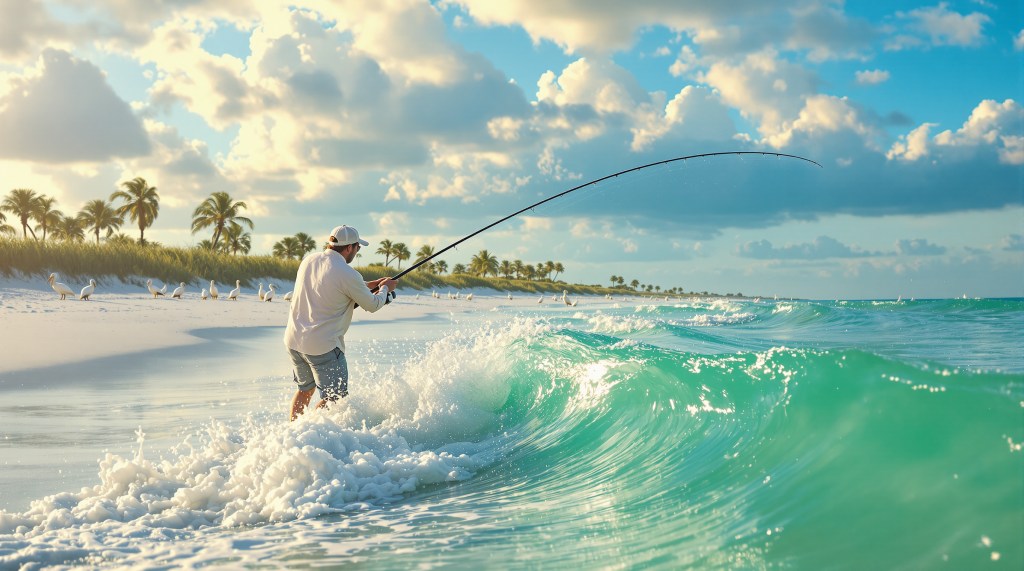
Fort Myers Beach has always been a fishing town. Long before the beach chairs and umbrella rentals, people came here for the bite — snook sulking in the shadows of the bridge, redfish tailing across the grass flats of Estero Bay, and boats idling out of the pass the moment the tide turned. After Hurricane Ian, the island rebuilt its piers, docks, and passes, and the fishing came back with it. If you’re staying at “Do We” Beach House, you’re a short walk or a short drive from some genuinely good water.
Here’s how to plan a day on it — whether you’re casting from the sand for the first time or you brought three rods and a tackle box.
Where to Start: Shore and Pier Fishing
You don’t need a boat to catch fish here. Some of the best action on the island happens within a few steps of the house.
- The Fort Myers Beach Pier at Times Square. The island’s classic fishing spot, and the easiest place to put a line in the water. The pier reaches out over the Gulf, and regulars pull whiting, pompano, Spanish mackerel, sheepshead, and the occasional snook off the rail. Arrive early to claim a spot, and watch what the locals are using for bait — they’re never wrong.
- The surf. Pompano, whiting, and flounder patrol the troughs right along the beach. A small piece of shrimp or a sand flea on a light rod is all it takes, and the best window is a rising tide. Bring a sand spike to hold your rod and a chair, and you’re set for the afternoon.
- Bowditch Point Park. At the north end of the island, the park pairs open beach with the current of the pass, which pulls in snook, jack crevalle, and redfish. Quiet, natural, and rarely crowded.
- The passes. Matanzas Pass at the north end and Big Carlos Pass at the south end are where the water moves — and moving water means moving bait and feeding fish. Fish the bridges and jetties on a falling tide and you’re in the right place.
The Backwater: Estero Bay
The shallow flats and mangrove edges behind the island are the heart of inshore fishing here. This is redfish, spotted seatrout, snook, mangrove snapper, sheepshead, and flounder water — the kind of fishing that rewards slowing down and reading the tide. A tailing redfish pushing across a grass flat on a falling tide is one of the great sights in Florida fishing.
You don’t need your own boat. Kayak and paddleboard rentals launch straight into the bay, and a local guide will put you on fish you’d never find on your own — worth every dollar if it’s your first time in these waters.
Offshore and Charter Trips
Head a few miles out and the whole game changes. Grouper, snapper, kingfish, cobia, and the summer run of mahi all live beyond the beach. Half-day, three-quarter-day, and full-day trips leave from the island and nearby marinas, and you have two good options:
- Head boats (party boats) — affordable, family-friendly, and a great introduction if you’ve never fished offshore. Bait and tackle are provided.
- Private charters — a captain who tailors the trip to what you actually want to catch. Ideal for a group, and the best bet if you have kids or a specific species in mind.
What’s Biting, by Season
Fall is our favorite stretch on the calendar — the annual mullet run pushes bait south along the beaches, and everything big follows it. It’s also when snook season reopens on the Gulf coast (September 1), which makes autumn a genuinely special time to be here.
- Fall (Sep–Nov): the mullet run brings snook, redfish, tarpon, Spanish mackerel, and jack crevalle right to the beach.
- Winter (Dec–Feb): sheepshead crowd the bridges and dock pilings, sea trout work the flats, and redfish stay active through the cooler water.
- Spring (Mar–May): snook wake up with the warming water, and the first tarpon start showing in the passes.
- Summer (Jun–Aug): tarpon season peaks. Fish early mornings and late evenings to beat the heat, and the action is worth it.
Licenses, Bait, and the Rules
Florida’s size and bag limits change by species and season, and they matter — check MyFWC.com before you fish, and grab the free regulations sheet at any tackle shop. Most anglers need a saltwater fishing license (Florida residents 65 and over are typically exempt, and most charter and head-boat trips carry a license that covers everyone aboard), but confirm your situation before the trip.
Live shrimp is the universal bait and catches nearly everything that swims here. If you’d rather throw artificials, gold spoons, soft-plastic jigs, and shrimp-pattern lures all produce. The island’s tackle shops and marinas can set you up with bait, tackle, and the day’s local report — just ask what’s working.
Your Catch, on the Table
Half the reward is dinner. Fresh snapper or redfish, simply seasoned and seared, is about as good as seafood gets — butter, lemon, and a little blackening spice is all you need. If you’d rather let someone else handle the cooking, several island restaurants will prepare your catch for you; ask when you call ahead.
Make a Fishing Day Part of Your Stay
The best version of a Fort Myers Beach fishing day starts with rods on the sand at sunrise, ends with a plate of whatever you caught, and fits a pool-and-hot-tub afternoon in between. “Do We” Beach House sleeps 11 across four bedrooms and a den, sits roughly 600 steps from the beach, and comes with a private heated pool, a hot tub, and room for the whole crew — dogs included.
Ready to plan the trip? Book through Coastal Vacation Properties: coastalvacationproperties.net/935107
#fortmyers #comingbackstronger #FMBSTRONG #beachstyler #fortmyersstrong #fortmyersbeach #fortmyersflorida


Leave a comment