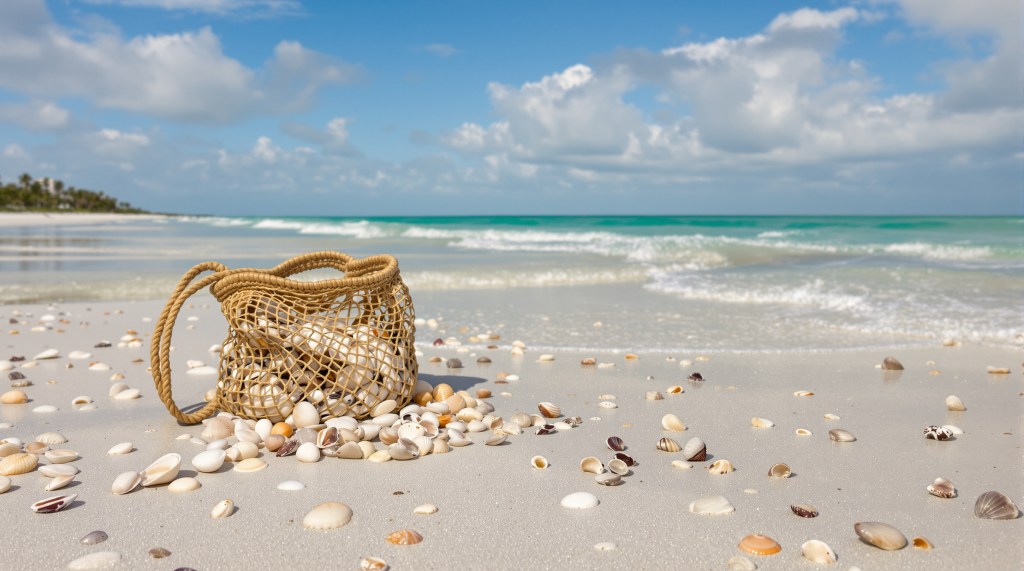
There’s a quiet ritual on Fort Myers Beach that happens before the sun gets high: the low-tide shell walk. Coffee in hand, shoes off, eyes down — and the beach gives back a little something every single time. The Gulf of Mexico deposits some of the best shelling in Florida right here on our white quartz sand, and it costs nothing but an early alarm.
From “Do We” Beach House, the water is about 600 steps away — close enough that shelling mornings are a spontaneous thing, not a planned excursion. Here’s how to make the most of them.
When to Go Shelling
Timing matters more than technique. The three golden windows:
- Early morning. Before the crowds arrive — the overnight high tide leaves a fresh line of treasure on the sand.
- Low tide, especially the hour around it. Check a tide chart the night before. Falling tide exposes the sandbars and troughs where shells collect.
- After a storm or a strong onshore wind. Rough water churns up the Gulf floor and piles shells into the wrack line. The day after a blow is often the best day of the month — just check conditions before heading out.
Winter nor’easters are legendary for shell deposits, but summer squalls and the days around the full moon (spring tides) are excellent too.
The Best Shelling Spots
- Fort Myers Beach, right out front. The stretch from Times Square toward the pier holds plenty, especially near the rock jetties at the north end. The beach in front of our house is walkable shelling every morning.
- Bunche Beach. Just north of FMB on San Carlos Bay — shallow, calm, and a known spot for pen shells, clams, and sand dollars. Go at low tide and walk the flats.
- Lovers Key State Park. A few minutes south of the island. The gulf side beaches here are consistently good, and the state park keeps them quiet.
- Bowman’s Beach, Sanibel. Worth the 40-minute drive — Sanibel is famous for shelling for a reason. Bowman’s has plenty of parking and a rinse station at the boardwalk.
Shells You’re Likely to Find
- Lightning whelk — our showpiece. Big, spiraled, and unmistakable.
- Fighting conch — sturdy and common; the older ones get that handsome orange-pink lip.
- Sand dollars — look for the round, flat silhouettes half-buried in the troughs.
- Scallops — the tiny, fan-shaped ones come in creams, corals, and purples.
- Letter olives, shark eyes, and coquinas — the colorful smalls that fill a jar in a single morning.
Shelling Etiquette
- Empty shells only. If something is living in it, put it back — it’s the law (recreational collecting of live shells requires a saltwater fishing license) and it keeps the beach healthy.
- Check sand dollars before you keep them. If it has a fuzzy, velvety coating, it’s alive — return it gently. Sun-bleached and smooth means it’s a keeper.
- Respect the protected areas. Shell collecting isn’t allowed inside J.N. “Ding” Darling refuge on Sanibel or in some park zones — when in doubt, look for signs.
- Leave the beach better. Carry out any trash you spot. It’s the island way.
What to Bring
- A mesh bag — lets the sand drain as you walk
- A small sifter or colander from the kitchen — genius for sand dollars and coquinas
- Water shoes — the stingray shuffle is real; slide your feet and give them a wide berth
- Sunscreen, a hat, and a full water bottle — the sun is serious even at 7am
Back at the house, the day’s haul rinses off in the outdoor shower and becomes a windowsill collection before lunch — or a craft project if the kids are winning the treasure count. There’s no wrong way to spend a shelling morning on Fort Myers Beach, only early ones and later ones. We know which we recommend.
Planning a shelling trip? Check availability at “Do We” Beach House — 4 bedrooms, a private pool, and the beach 600 steps from the back door.
#fortmyers #comingbackstronger #FMBSTRONG #beachstyler #fortmyersstrong #fortmyersbeach #fortmyersflorida


Leave a Reply