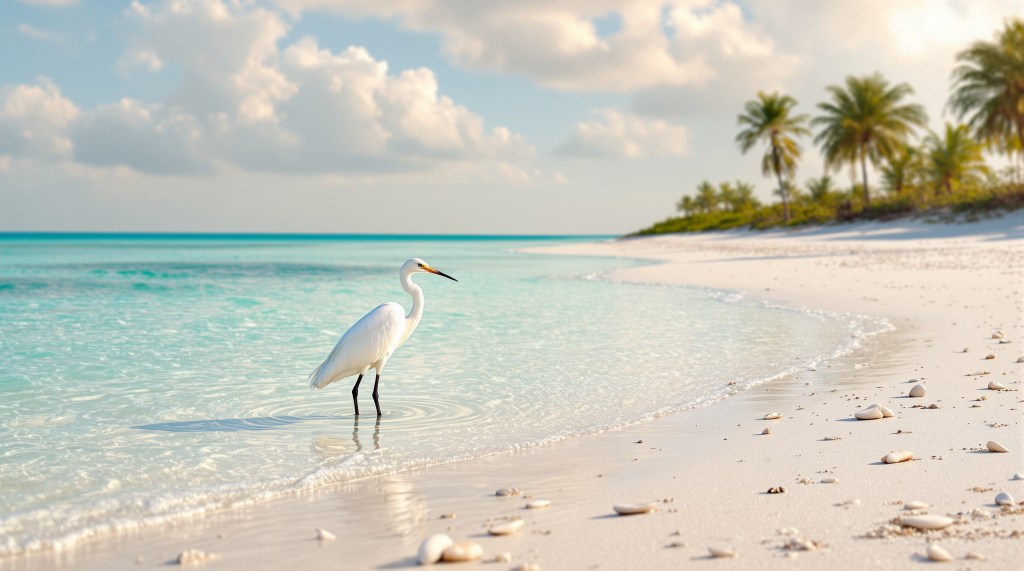
There is a quieter side of Fort Myers Beach that shows up right around sunrise. The sand is still cool, the Gulf is the color of green glass, and the birds own the shoreline — least terns working the swash line, black skimmers dozing in tight packs, an osprey taking the long way home with a mullet. You don’t have to be a birder to enjoy it. You just need to know where to look. Here’s the island’s best birding, by the spot and by the season.
Little Estero Lagoon: the island’s bird headquarters
At the south end of the island, tucked behind the beach, sits Little Estero Lagoon — a tidal lagoon the state designates as a Critical Wildlife Area. In summer, least terns and black skimmers nest on the open sand; you’ll see the roped-off nesting areas set up each season, and giving them room pays off with front-row views of chicks learning to fly. Come fall and winter, the lagoon fills with migrant shorebirds resting before the next leg of their journey. Walk the beach at the south end of Estero Boulevard at low tide and you’re looking at one of the best shorebird spots in Southwest Florida.
Bunche Beach at low tide: spoonbill country
Just across the Matanzas Pass bridge, Bunche Beach Preserve fronts San Carlos Bay — about five minutes from the house and a different world. At low tide the bay flats run out for what feels like miles, and that’s when the roseate spoonbills show up, sweeping their paddle-shaped bills through the shallows. Great egrets, snowy egrets, and willets work the same flats. It’s also one of the best sunset spots on the bay side, so you can bird and watch the sky do its thing in the same hour.
From the water: Mound House kayak tours
Some birds don’t show well from the beach, and the mangroves lining Estero Bay are full of them. Mound House — the ancient Calusa shell mound at 2000 Estero Boulevard that doubles as a museum and launch point — runs guided kayak eco-tours through the back bays. Paddling at a slow drift you’ll see tricolored herons, white ibis, and maybe a mangrove cuckoo, plus the dolphins that work the bay most mornings. Tours fill up in season, so book ahead.
A day trip worth taking: J.N. “Ding” Darling on Sanibel
About a 30-minute drive across the causeway, the J.N. “Ding” Darling National Wildlife Refuge is one of the country’s top birding destinations and an easy morning from the house. Drive the Wildlife Drive slowly, or rent a kayak at Tarpon Bay and paddle the mangrove trails. Roseate spoonbills, reddish egrets, and anhingas are close to guaranteed, and the late-afternoon light turns the whole refuge gold. Pack a picnic — the refuge is a half-day at minimum.
When to go and what to bring
- Early morning is the golden window: birds are most active, the beach is quiet, and the light is soft.
- Falling tide concentrates birds on the flats. Check a tide chart and time your beach birding around it.
- Late summer into fall is migration season — the first shorebirds of the year start arriving in August.
- Bring binoculars (a compact pair makes a real difference), water, a hat, and reef-safe sunscreen. A phone with a good zoom handles photos fine; no long lens needed.
- Leave the birds alone: stay outside posted nesting areas, don’t feed wildlife, and keep dogs leashed where the rules require it. The birds are on a schedule; we’re just visiting.
From the beach to the lanai
The nice part of birding from a rental house is the second act: a sunrise paddle or a low-tide walk, then back for coffee on the lanai while the ospreys cruise overhead. The “Do We” Beach House sits about 600 steps from the sand, with a private pool and hot tub for the non-birders in your group — and it’s pet-friendly, so your co-pilot can come along (check the beach’s pet rules before you head out). If this sounds like your kind of morning, see the house and check availability at Coastal Vacation Properties.
#fortmyers #comingbackstronger #FMBSTRONG #beachstyler #fortmyersstrong #fortmyersbeach #fortmyersflorida


Leave a Reply