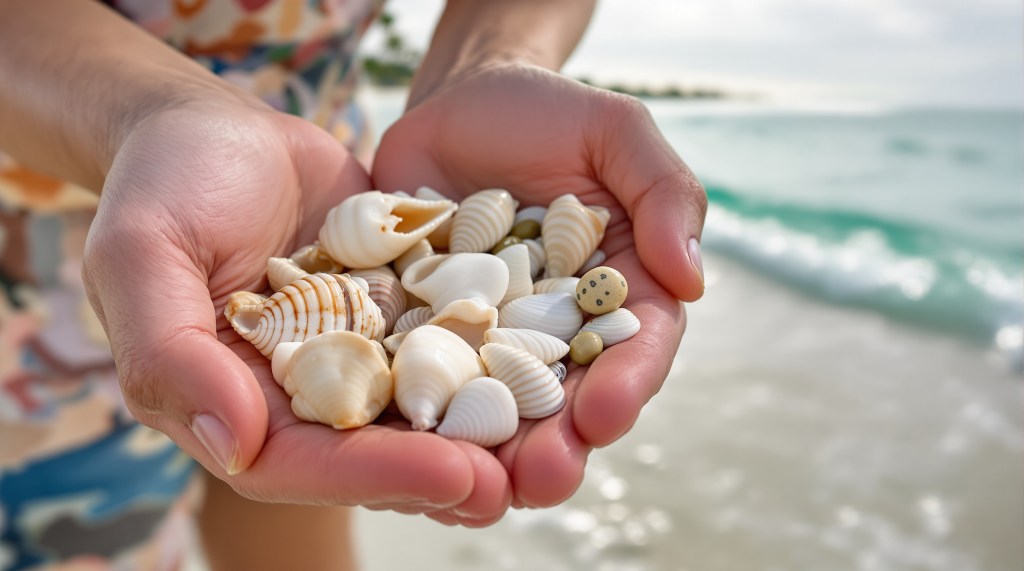
There’s a quiet hour on Fort Myers Beach most visitors sleep through. The sun’s barely up, the Gulf is glassy, and the tide is pulling out — leaving behind a fresh line of shells on the white sand. This is shelling time, and it’s the best free show the island puts on all day.
If you’re staying at our beach house, you’re about 600 steps from that show. Here’s how to find the good stuff.
When to go
Timing beats luck almost every time.
- Low tide, especially the hour right around it. That’s when the water pulls back far enough to expose sandbars and the wrack line — the row of seaweed, shells, and treasure the tide left behind.
- First thing in the morning. Fewer feet in the sand, and the angle of the light makes shells pop.
- After a windy night or a front pushes through. A couple of days of rough water stirs the bottom and deposits fresh shells on the beach. Check the tide chart the night before — the low tide time shifts about 50 minutes later each day.
Where to look
You don’t need a boat or a secret spot. You need to walk the right stretch at the right time.
- Right out front. Walk north or south from the beach access nearest the house and work the wrack line. The stretches with fewer people always have more shells — a 10-minute walk down the beach is usually all it takes.
- Bowditch Point Park. At the northern tip of the island, this natural preserve has an undeveloped beach where shells pile up at the point. Quiet, no buildings, and the walk out to the tip is worth it.
- Lovers Key State Park. About a 10-minute drive south of the bridge, Lovers Key’s wide beaches are prime sand dollar territory — especially after low tide. It’s $8 per vehicle and feels like a different world.
- Right where the waves break. Shells tumble in the surf zone; gentle knee-deep water is where you’ll spot the bigger ones rolling with each wave. (Keep an eye out for stingrays and shuffle your feet — that’s the local move.)
What you’ll find
Fort Myers Beach sits on the Gulf side of Estero Island, and the shell mix here is a classic Florida assortment:
- Lightning whelk — Florida’s state shell, with the opening on the left side. They get big, and a whole one is a real find.
- Fighting conch — heavy, spiral, and everywhere. The glossy interior is worth a rinse.
- Scallops — the little fan-shaped ones, often in pink, orange, and purple.
- Lettered olives — smooth, polished-looking cylinders; the classic “jewelry box” shell.
- Coquinas — tiny, colorful, and plentiful; kids fill buckets with these.
- Sand dollars — check Lovers Key, especially after low tide. Sun-bleached white ones are keepers; sand-colored ones are best left in the water.
- Shark teeth — rarer, but they’re out there if you’re persistent.
A quick etiquette note
Take only the empty ones. If it’s still occupied — a live whelk, a hermit crab using a shell as a home, a sand dollar that’s still fuzzy on the bottom — put it back. Florida rules are simple: live shells stay on the beach. Empty shells are yours to keep, and a quick rinse with fresh water will have them looking like a gift shop display.
Shelling is one of those things that’s free, family-friendly, and different every single morning. Low tide + a bucket + coffee is a complete Fort Myers Beach morning — and you can be back at the house with your finds before the pool chairs fill up.
Save this post for your trip, and if you’re planning one — our beach house is steps from the sand, with a pool, hot tub, and plenty of room for the whole crew. Check availability and book through Coastal Vacation Properties here: coastalvacationproperties.net/935107.
Happy hunting. 🐚
#fortmyers #comingbackstronger #FMBSTRONG #beachstyler #fortmyersstrong #fortmyersbeach #fortmyersflorida


Leave a Reply