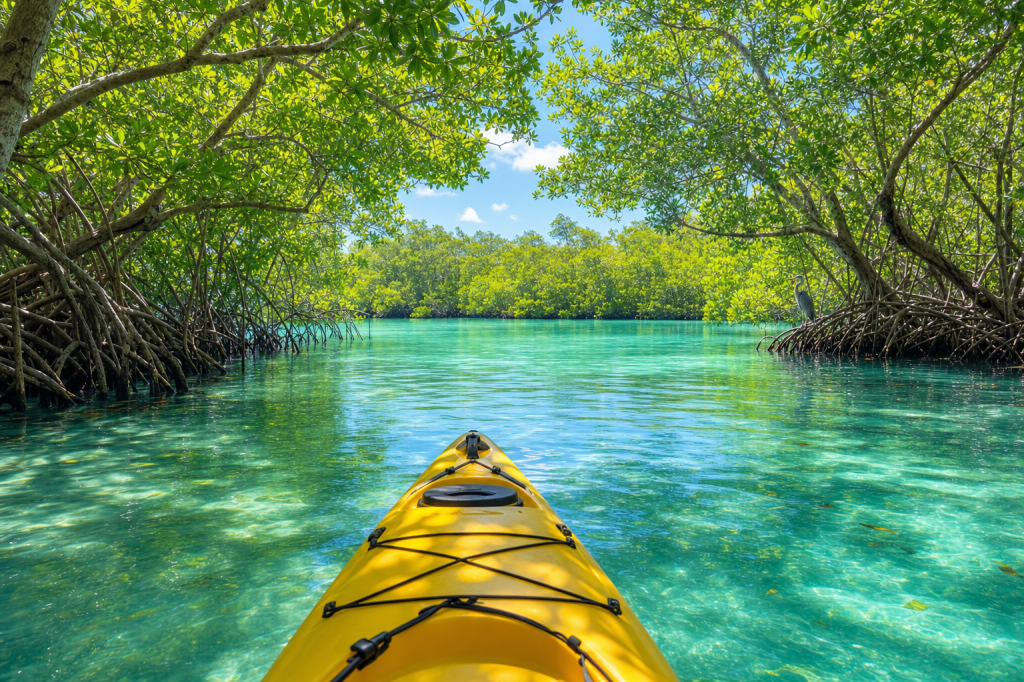
Fort Myers Beach is famous for its seven miles of white sand and turquoise Gulf waters. But turn your gaze inland — toward the back bays, mangrove creeks, and calm estuaries that thread through Estero Island and the surrounding mainland — and you’ll find an entirely different side of Southwest Florida. One best explored at a slow, quiet pace, from the seat of a kayak or paddleboard.
Whether you’re a first-timer who’s never held a paddle or a seasoned paddler looking for new water, here’s where to go, what to see, and how to make the most of a day on the water near Do We Beach House.
Why Paddling is Perfect in Summer
Summer on Fort Myers Beach means long, warm days and calm morning waters. The Gulf can get choppy by afternoon, but the back bays stay glassy — ideal conditions for kayaking and paddleboarding. You’ll also find the best wildlife activity in the early mornings, when the heat hasn’t yet driven everything into the shade.
Go early (sunrise to 9 a.m.) and you’ll have the water almost to yourself. The light is golden, the temperature is bearable, and the birds are hungry — which means they’re out and active, not hiding from the midday sun.
Best Spots for Kayaking and Paddleboarding
1. Lovers Key State Park
Just a five-minute drive south of the house, Lovers Key offers a protected paddle trail through mangrove tunnels and along the back side of the island. Rentals are available on-site, or bring your own. The paddle from the park’s launch around the southern tip of the island is a classic — manatees, dolphins, and roseate spoonbills are common sights. Park entrance fee: $8 per vehicle.
2. Matanzas Pass Preserve
This 60-acre bayside preserve is walking distance from the house — head to the end of Estero Boulevard near the bridge. The kayak launch at the preserve gives you access to miles of protected mangrove waterways. It’s a birder’s paradise: herons, egrets, ospreys, and the occasional bald eagle. The paddle here is shaded and quiet, even on busy holiday weekends.
3. Big Carlos Pass
Where Estero Bay meets the Gulf, Big Carlos Pass is a great launch point for paddlers who want options. Stay inside the bay for calm, flat water, or if conditions allow, venture through the pass to the Gulf side for a completely different experience. This is a popular spot for paddleboarders at sunset.
4. Estero Bay Preserve State Park
Across the bridge on the mainland side, Estero Bay Preserve offers a network of paddling trails through one of Florida’s most productive estuaries. The launch area is on Coconut Road. This is your best bet for a longer, more remote paddle — you can easily spend two to three hours exploring the backcountry here without seeing another person.
What You’ll See
Every paddle is different, but here’s what you’re likely to encounter on a typical summer morning:
- Bottlenose dolphins — they feed along the passes and often surface just yards from your kayak
- Manatees — look for the telltale swirl of a tail in shallow grass flats
- Roseate spoonbills — impossible to miss with their bright pink feathers and spoon-shaped bills
- Mangrove crabs and rays — skimming across the sandy bottom in the shallows
- Juvenile fish — tarpon, snook, and redfish use the mangroves as nurseries
Rentals vs. Bringing Your Own
If you’re flying in, several outfitters within a five-minute drive rent kayaks and paddleboards by the hour or day. Try Gulf Coast Kayak on Estero Boulevard or Fort Myers Beach Kayak Rentals near the pier. Rates run about $25–40 for a single kayak for two hours, or $50–60 for a full day. Paddleboards are typically $30–50 for a half-day rental. Most outfitters deliver and pick up, which makes it easy.
If you’re driving down and have the space, bring inflatable kayaks or paddleboards — they pack small and pay for themselves in a few outings.
Tips for a Great Paddle
- Go early. By 7 a.m. the water is calm, the wildlife is active, and you’ll beat the afternoon thunderstorm risk.
- Wear reef-safe sunscreen and a hat. The reflection off the water is intense.
- Bring water. More than you think you need. Paddling is deceptive exercise.
- Check the tide. Launching at low tide means more exposed oyster bars and shallower water. High tide gives you access to narrow mangrove tunnels.
- Watch for boat wakes. Even in the back bays, stay visible and give powerboats a wide berth.
- Leave no trace. Pack out everything you bring in. The mangroves are fragile.
Back at the House
After a morning on the water, rinse off in the outdoor shower, grab a book by the private pool, and let the Gulf breeze do the rest. That’s what summer on Fort Myers Beach is really about — active mornings, lazy afternoons, and the kind of tired that comes from a day well spent outdoors.
 Do We Beach House
Leave a comment