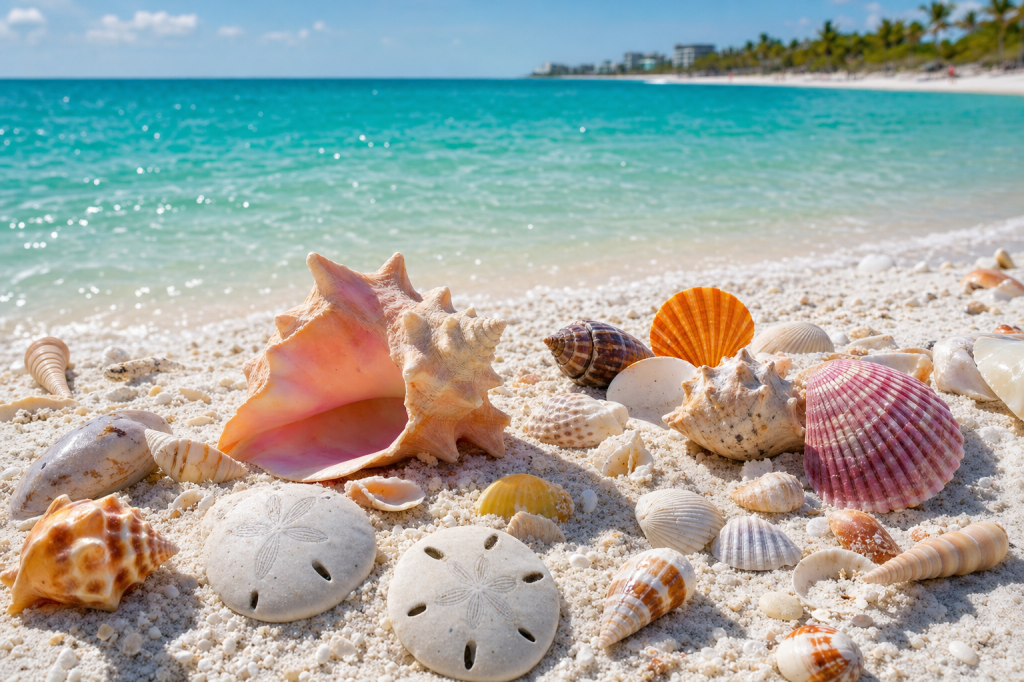
The Best Shelling on Fort Myers Beach: A Beachcomber’s Guide
Fort Myers Beach is one of the best places on Florida’s Gulf Coast for shelling. The gentle waves, wide sandy shoreline, and abundant marine life make every walk along the water a treasure hunt. Whether you’re a casual collector or a dedicated sheller, here’s what you need to know to find the good stuff.
When to Go Shelling
Timing matters. The best shelling happens two hours before and after low tide, when the receding water exposes new treasures. Early morning is ideal — fewer people, softer light, and the overnight tide has had all night to deposit shells. Winter cold fronts (Nov–Mar) often push in bigger shells and shell beds after a strong wind from the west or southwest. Summer storms can also churn things up, but the best shelling windows are usually right after a blow.
The Best Spots on Estero Island
The entire seven-mile stretch of Fort Myers Beach has shelling potential, but a few spots stand out:
- Bowditch Point Park (the north end) — A quieter spot with good shell deposits, especially after a tide change. The park also has a nice nature trail and beach access.
- Lynn Hall Beach Park — Central location, good shelling along the sandbars at low tide. Easy parking and close to Times Square.
- Little Estero Island Critical Wildlife Area (south end, near the Holiday Inn) — A protected nesting area with less foot traffic. Stick to the waterline and respect marked nesting zones. Shells can accumulate here undisturbed for longer stretches.
- Newton Park — Wide beach, good for long walks and after-storm shelling.
What You Might Find
Fort Myers Beach shellers commonly find:
- Fighting conch — One of the most common finds, these spiraled shells come in cream, orange, and brown. Look for whole ones at low tide.
- Lightning welk — A beautiful shell with distinctive spiral stripes. Less common but a real prize.
- Scotch bonnet — Florida’s state shell, shaped like a bonnet with checkered patterns. A lucky find on FMB.
- Sand dollars — Often found in shallow water or washed up after a storm. Let live ones (with velvet-like spines) stay in the water.
- Olive shells — Sleek, glossy shells in gray, tan, or blue-gray. Look for them near the tide line.
- Lettered olives — Larger cousins with elegant markings. A good day’s find.
- Calico scallops, coquinas, and pen shells — Colorful smaller shells that make great jar collections.
Shelling Tips
- Bring a mesh bag — Lets sand and water drain so you can keep walking without getting weighed down.
- Wear water shoes — Some shells, urchins, and crabs hide just under the surface.
- Use a shelling scoop or sifter — Great for catching small treasures in shallow water without bending over constantly.
- Check the tide charts — Apps like Tide Chart or NOAA’s site make it easy to plan your walk.
- Go after a storm — Northerly winds in winter or a summer squall can churn up deeper shells you wouldn’t normally see.
- Leave live shells — Florida law protects living marine life. Take empty shells only, and leave the occupants to keep the ecosystem healthy.
What to Do With Your Finds
Bring your treasures back to Do We Beach House for a quick rinse in the outdoor shower — we’ve got a spot on the lanai where past guests have left their best finds. Shells make great souvenirs, table decorations, or gifts for friends back home. If you find something extraordinary (a perfect junonia or a massive horse conch), the Bailey-Matthews National Shell Museum on nearby Sanibel Island (about 25 minutes by car) can help with identification.
Plan Your Shelling Getaway
Fort Myers Beach is beautiful year-round, but shellers tend to love winter and spring for the cooler temperatures and better shell turnover. Book directly at Do We Beach House for the best rates and a private heated pool, hot tub, and easy beach access — about 600 steps to the sand.


Leave a Reply